
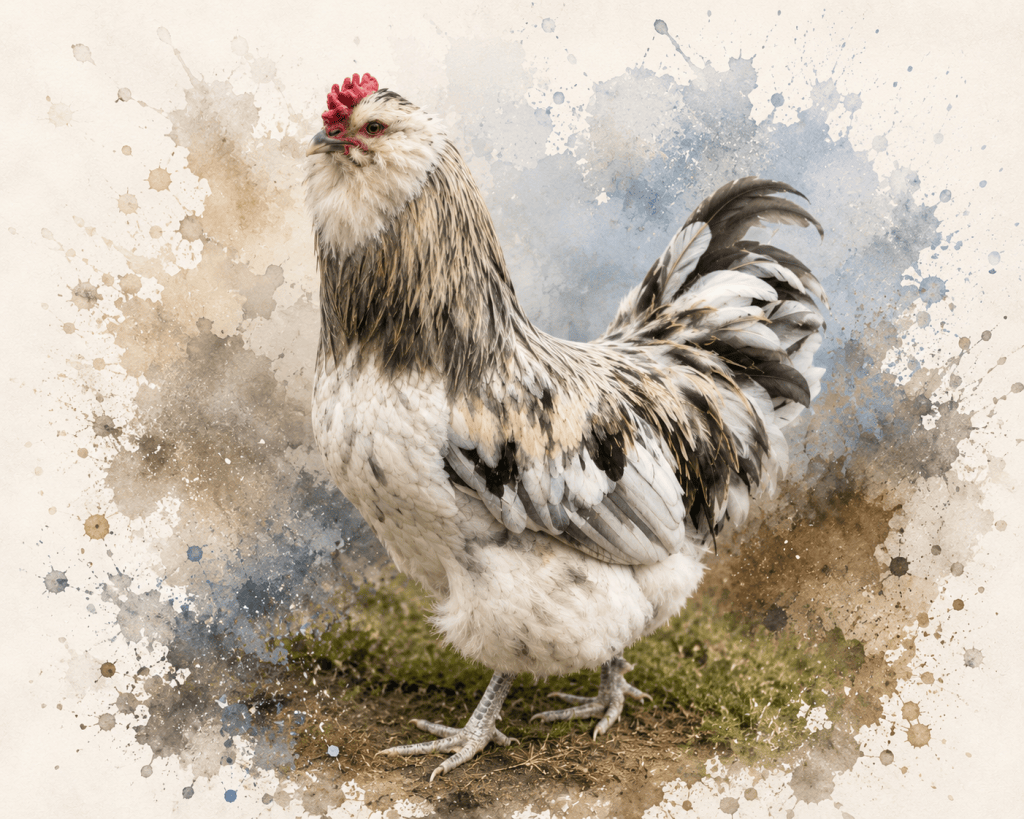
She came home in April as a splash Ameraucana chick — pale and milky and mottled, the whole bird the color of the inside of a shell. That’s where the name came from. Pearl. It was the obvious thing to call her and I didn’t think about it twice.
She was supposed to be a hen. That was the arrangement. And for three and a half months nothing about her suggested otherwise.
Then one morning in late July I was filling the waterer and heard a sound out of the coop like a rusty gate being asked a question. “Why do I have a Spash Americ
Why I Didn’t See It Coming
Here’s the thing about Ameraucanas: they hide it.
Most chicken breeds have a single comb, and a single-combed cockerel gives himself away early. The comb reddens and swells by six or eight weeks and you know exactly what you’re looking at. Ameraucanas have a pea comb — small, low, three little ridges — and it stays pale and unremarkable for months. The usual tell simply never fires.
So you have to read feathers instead. The two to watch:
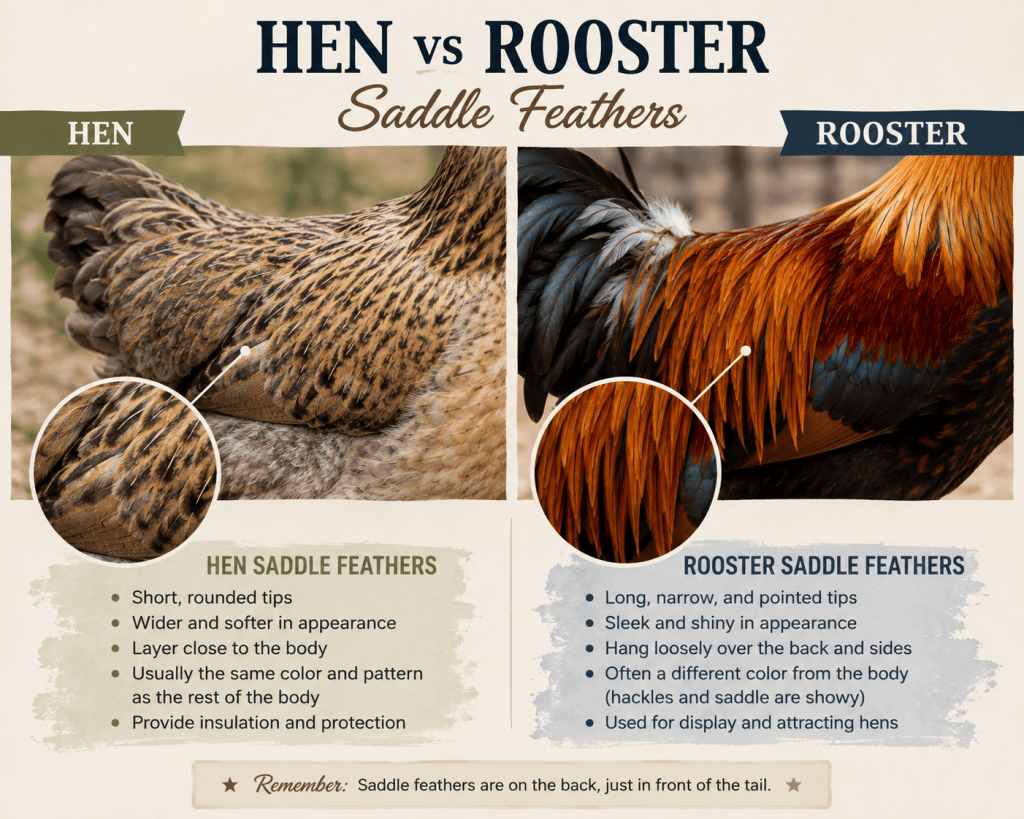
- Saddle feathers. On the lower back, just ahead of the tail. Hens keep them rounded. A cockerel grows long, pointed, narrow ones that drape down over his sides like a fringe, usually somewhere between twelve and sixteen weeks.
- Hackle feathers. Around the neck. Same rule — rounded on a hen, pointed and glossy on a cockerel.
On a splash bird those shapes are easy to read, because the pale mottled pattern throws the outline of each feather into relief. Which is to say every clue was there in plain sight, and I still didn’t work it out until he told me himself.
Other things worth watching: standing taller than his hatchmates, thicker legs, a bolder walk, and a habit of putting himself between the flock and whatever’s new in the yard.
She became Pete that morning. It seemed only fair.
When It Went Wrong
Crowing I could live with. A crowing bird is a nuisance and a neighbor problem, and neither of those is a crisis.
What came next was different.
Within about a week Pete started going after the pullets. Not the clumsy, over-eager chasing that young cockerels do — the kind where he grabs a hen by the back of the neck, makes a mess of her feathers, and everybody moves on. This was head-directed. He’d take a hen by the head and drag her across the coop. He pecked heads hard enough that I’d find him at it from across the run. He’d chase birds down and pull feathers out in the process.
I want to be careful here, because this distinction is the whole thing.
Ordinary adolescent behavior targets backs and saddles. It’s rough, it wears the feathers off a hen’s back, and it usually settles as the bird matures. Annoying, not dangerous.
Head-directed attacks are something else. The head and eyes are where chickens get seriously hurt, and a bird pinned by the head can’t defend herself. That isn’t mating behavior gone clumsy. That’s a bird trying to do damage.
There was also arithmetic working against me. That spring batch was two cockerels and nine pullets, all the same hatch — roughly one male to four and a half females, when the working guidance is one to eight or twelve. No older rooster in with them to enforce any manners. Just adolescents sorting out a hierarchy on birds who had nowhere to go.
But plenty of flocks run two young cockerels without one of them dragging hens around by the head. The ratio explains the pressure. It doesn’t explain Pete.
The Thing That Decided It
No hen ever bled. Nobody lost an eye. If I’d been waiting for an injury to justify acting, I’d still have been waiting.
What I noticed instead was that the whole flock had started avoiding him.
They’d hang back from the feeder while he was at it. They’d pick a corner and stay in it. Birds that had been busy and nosy and underfoot all spring turned watchful and small. Nothing about them looked hurt. Everything about them looked afraid.
That’s the part I’d tell anyone still deciding. You don’t have to wait for blood. A flock that has rearranged its whole day around avoiding one bird is a flock already paying for him — in feed they’re not eating, water they’re not drinking, nest boxes they’re not using, and eggs you’re not getting. The damage is real well before it’s visible.
First week of August, Pete was butchered. April to August, start to finish.
What He Was Like to Eat
He dressed out at a little over three pounds. An Ameraucana is a laying breed, not a meat bird, so what you get is a small, lean, sinewy carcass with white skin and slate-colored legs — nothing at all like the broiler in the grocery cooler.
I cooked him the same day. Salt, pepper, onions and basil and a diced tomato out of the garden, all of it in the countertop roaster.
He was stringy. Edible, decent flavor, but stringy — and I’ve since worked out that I did two things wrong, neither of which had anything to do with the bird.
I didn’t let him rest. A carcass cooked within a few hours of butchering is cooked in rigor, with the muscle locked up tight, and nothing you do afterward loosens it. Twenty-four to forty-eight hours uncovered in the fridge lets that resolve. It costs nothing but patience and it matters more than any other single step.
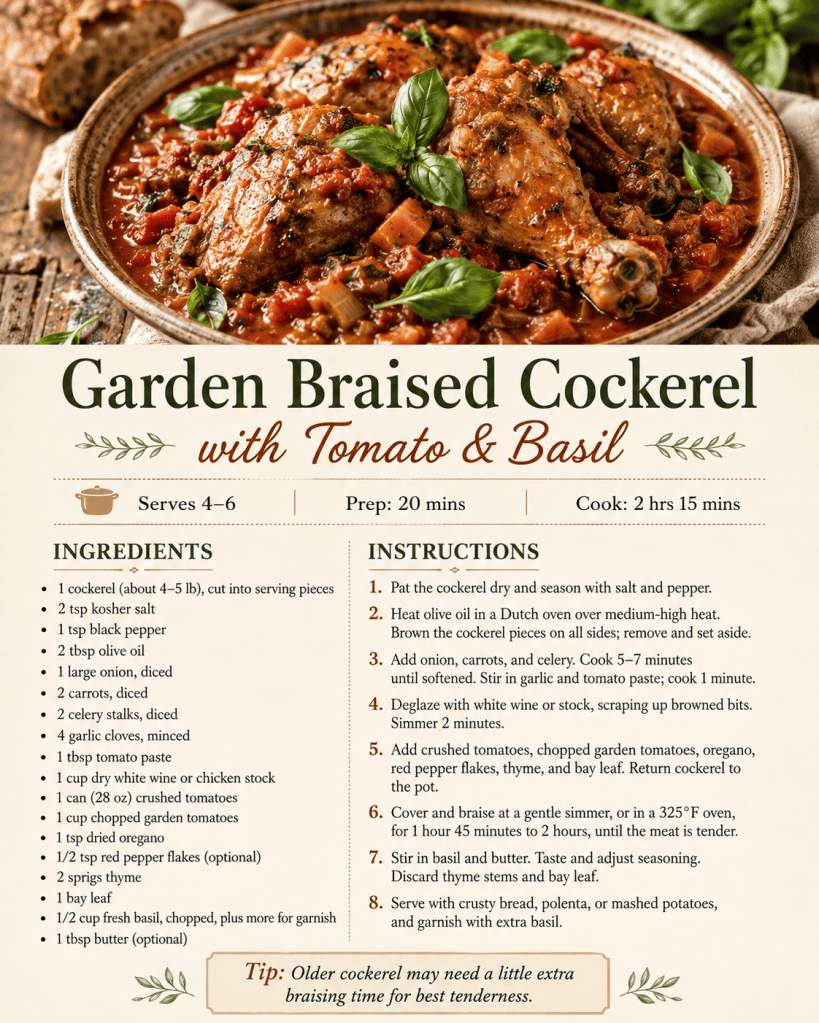
I roasted him. Dry heat is for a young, fat, fast-grown bird. A lean laying-breed cockerel wants moist heat — a covered braise with liquid, given time. Same ingredients I already had, same roaster even, just with broth in the pan and the lid on.
Here’s what I should have made, and what I’ll be making next time:
There’s Still One in the Coop
The other cockerel from that batch is a Naked Neck, and he came up behind the others — slower to develop, no crowing yet, no trouble with the hens so far.
I’d like to tell you that proves something about temperament. It doesn’t. He hasn’t hit the hormones yet, and a bird who hasn’t shown you who he is hasn’t not shown you either. He’s just late.
He’s going in the freezer this week regardless, because I already have the Naked Neck rooster I intend to keep, and there isn’t room on this place for a spare. He never got a name. That wasn’t cruelty, it was honesty — I knew what he was for by the time I knew what he was.
That’s two birds gone for two completely different reasons, and I think the difference matters. Pete went because he was dangerous, and that decision got made for me. This one goes because he’s surplus, and that’s just planning. Same outcome. Different math. Neither needs apologizing for.
And this time I’m resting the carcass two days before it goes anywhere near heat. If the texture comes out better, you’ll hear about it.
— Pearl


Leave a comment