
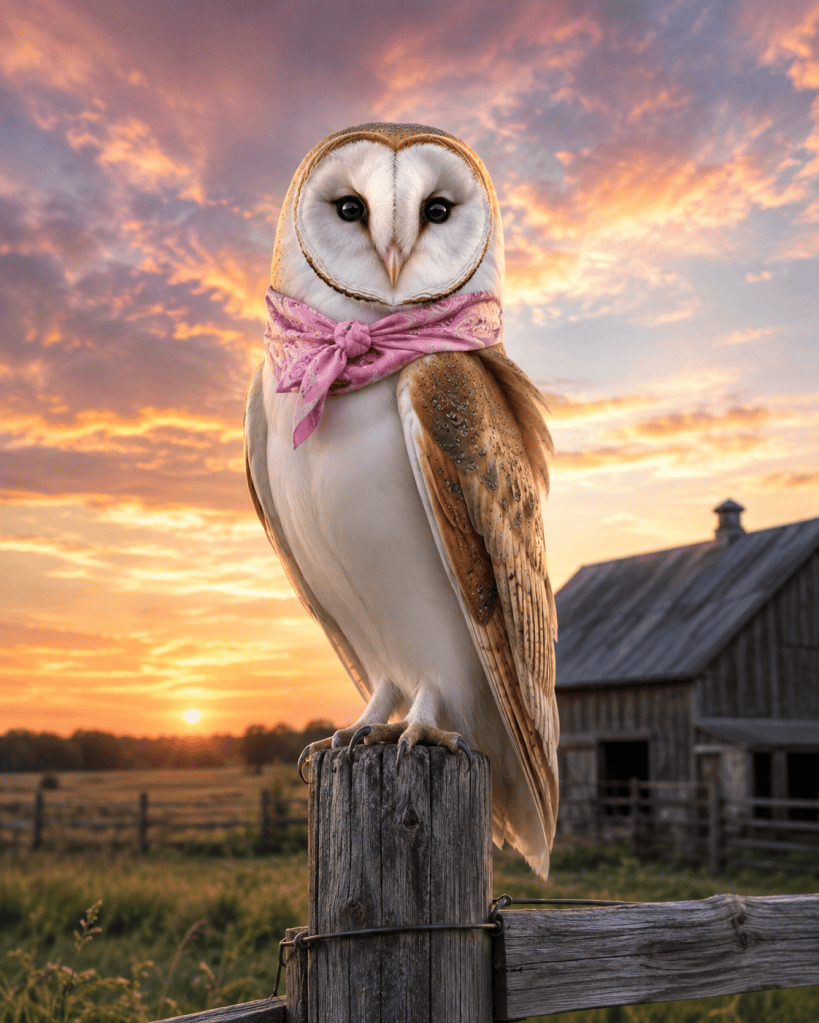
I’m Kara! I was minding my parents’ farm while they were away — one acre, a greenhouse, a garden that does not care about my schedule, and a flock of hens with strong opinions about being left in the care of an owl. What I was not expecting to be in charge of was two pigs.
They were supposed to arrive two weeks before any of that. That was the plan. Everyone had agreed to the plan.
The pigs were delayed, and so the pigs arrived on my watch instead.
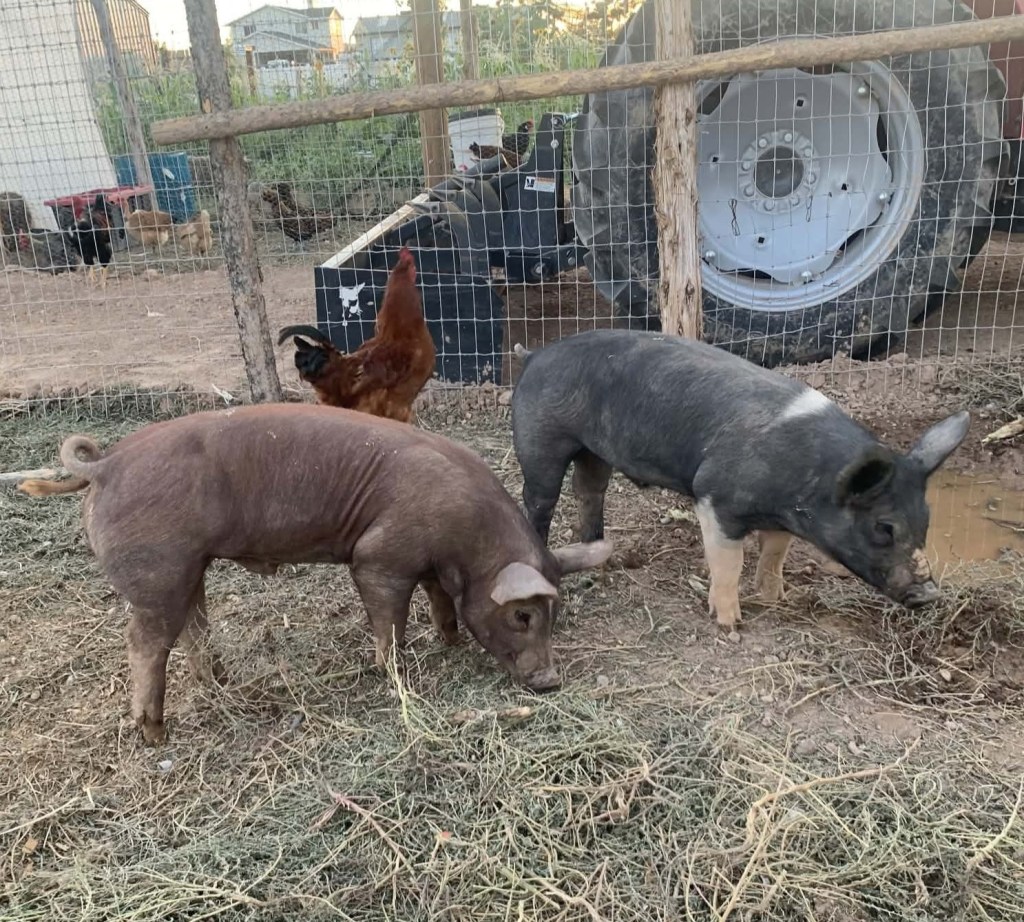
Puddles is the brown one. Cookie is black with a white stripe on his back. Both born this spring, which makes them big enough to be a project and young enough to still be figuring the world out — same as me!
I knew pigs were smart. I knew they were messy. I knew they liked to eat, which is the one thing everybody knows about pigs and the one thing that turns out to be a dramatic understatement. But knowing about pigs and standing in a pen with two of them leaning on my little legs are different educations entirely.
Here’s what I’ve picked up so far.
1. Pigs Are Basically Dogs
This was the first thing that caught me off guard.
They want attention. They figure out fast who brings the food and they greet that person like a best friend. They’ll follow you along the fence line just to see what you’re doing. And once they decide you’re all right, they seem to genuinely enjoy having you around — not in a livestock way, but in a sit down for a minute, we’re not finished with you way.
I’d expected chores. What I got was two very large, very muddy dogs who live outside and have never once been full.
2. They’re Smarter Than I Expected
Everyone says pigs are intelligent. Fewer people mention how quickly that intelligence gets pointed at you.
They learned the feeding routine in days. They know the sound of the bucket. They know which direction I come from and they’re waiting there before I arrive. Within a week they were letting me hand-feed them and stand close while they ate, which for a prey-shaped animal in a pen with an owl is a fairly generous vote of confidence.
There’s one catch. Height matters. Come in from above — say, off the fence rail, the way an owl naturally would — and they scatter. Come in low, on foot, moving slow, and they’ll walk right up.
So a good part of earning a pig’s trust turns out to be sitting in the dirt at their eye level, waiting, while they decide about you.
3. They Definitely Have Personalities
I’d never given this much thought. Two pigs, same age, same pen, same food. How different could they be?
Very.
Puddles is the friendly one — curious, first to investigate anything new, first to come over when I show up. Cookie is pushier, and has a distinct talent for trouble. Some days they trade roles entirely, usually depending on who has decided food might be involved.
Past that, they’re content to eat, sleep, root around, and mind their own business. Give it a couple of weeks and you start reading their little habits the same way you’d read a dog’s, or a cat’s, or a hen’s. Everybody out here is somebody.
4. They Can Make an Incredible Mess
Pigs are extraordinarily gifted at converting a tidy pen into something that looks like a crew came through overnight with heavy equipment.
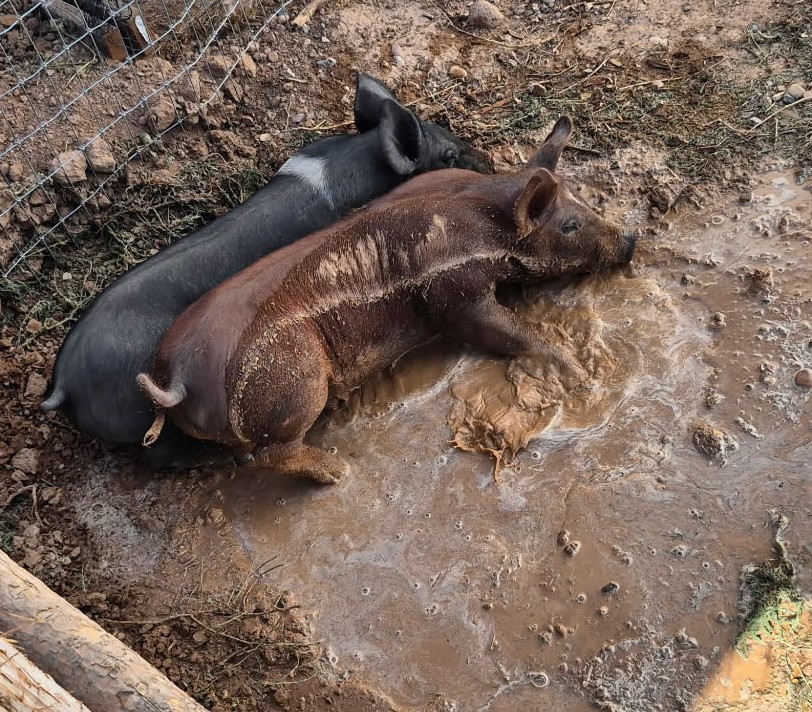
They bathe in their drinking water. They dig with their noses, constantly, for reasons known only to them. They step in things I won’t describe. And if there is water anywhere near dirt, there will be mud — not a patch of mud, a program of mud, expanding daily.
You can scrub the waterer. You can rake the pen. You can stand back and admire it for roughly ninety seconds. Then the pigs begin work on their own renovation plans, and yours are not part of them.
At some point you stop fighting it. Pigs are going to be pigs. And whoever named Puddles had no idea how right they were going to be.
That would be me.
“Stop making more mud puddles!”
“Oink.”
5. Farm Animals Teach You Patience
This is the big one, and it’s the one that keeps showing up whether the animal in question has feathers or hooves.
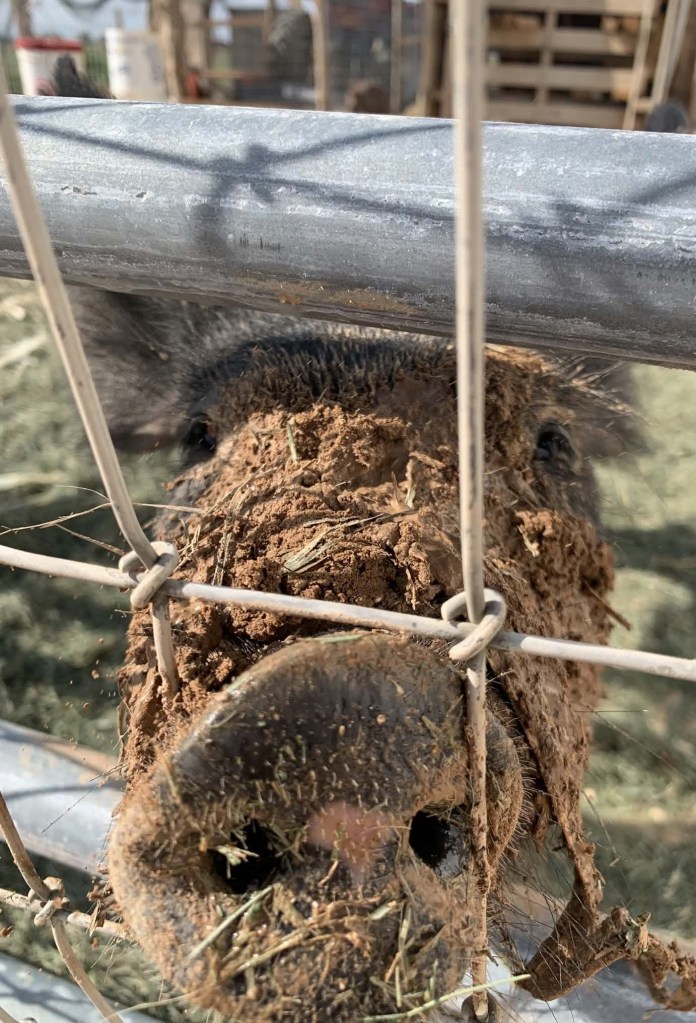
Animals don’t care about your schedule. They don’t care that you’re in a hurry. They don’t care that you just cleaned that. And they are entirely unmoved by the fact that you brought them eggs and apples an hour ago.
There are frustrating moments — like when they want the food in your hand so badly they briefly forget that your fingers are attached to it. But there are more moments that make you laugh, and the whole arrangement quietly teaches you to slow down, solve the problem in front of you, and try again tomorrow.
Somehow, after all the noise and the mud and the empty bowls and the questionable decisions involving drinking water, the place already wouldn’t feel right without them.
Which is a strange thing to say about two animals I wasn’t supposed to be here for.
Now that my parents are back, I’ve got a long flight ahead of me and three books coming along for it.
Storey’s Guide to Raising Pigs by Kelly Klober is the big reference — breeds, housing, feeding, health, all of it, from a man who has raised hogs in Missouri for close to forty years.
Homegrown Pork by Sue Weaver is the one written for a situation like this one, two pigs on a small piece of ground, and it covers everything from picking a breed to the harder end of things.
Small-Scale Pig Raising by Dirk van Loon is the short, no-nonsense one, especially good on what pigs eat and how that shapes what you end up with. Next time those two lean on my legs, I intend to know what I’m doing.
But there it is. I’m going to miss those piggies.
Gotta fly!
— Kara (filling in for Pearl)


Leave a comment